This 6 days itinerary is extremely fast-paced. It is a logistically demanding circuit covering Morocco’s highlights. The route efficiently links the desert, imperial cities, and the coast. Key stops include Merzouga, Fes, Chefchaouen, Rabat, Casablanca, and Marrakech. This journey requires several days of long-distance driving. Expect 5 to 9 hours of driving daily. Travel crosses the High and Middle Atlas Mountains. A private driver/guide is highly recommended. This manages the demanding travel schedule effectively.
Your hotel
8:00 AM
Desert & Mountain Scenery: Experiencing the dramatic scenery of the Dades Valley, Todra Gorge, and the Ziz Valley palm groves.
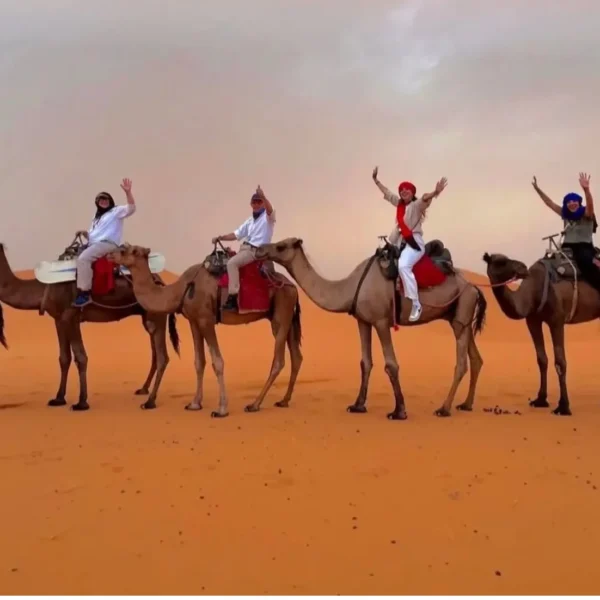
Sahara Camel Trek: Riding a camel into the Erg Chebbi dunes for sunset and spending a night at a desert camp in Merzouga.
The Blue City: Wandering the distinctive, blue-washed streets of Chefchaouen in the Rif Mountains.
Imperial Capital & Coast: Brief visits to the political capital, Rabat (Hassan Tower & Kasbah des Oudaias), and the economic hub, Casablanca (Hassan II Mosque).
Final Destination: Arrival in Marrakech, concluding the journey in the electric atmosphere of the Djemaa el-Fna square.
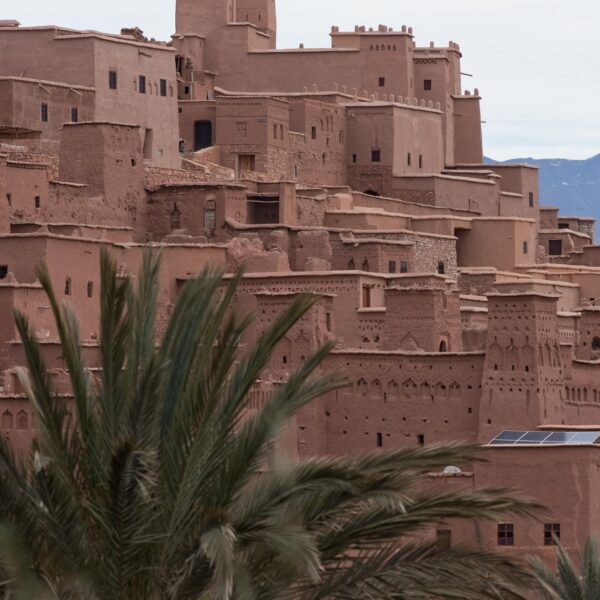
Day 1 is an immersive experience. It starts with an early morning from Ouarzazate. Ouarzazate is called the “Gateway to the Sahara.” The initial drive follows the famous Road of 1000 Kasbahs. You will pass through Berber villages. The terrain is dramatic and carved by time. Your first major stop is the Dades Valley. The valley is known for stunning gorges. It features unique rock formations called the “Monkey Fingers.” The road snakes through these towering canyon walls. This stop is a quick, perfect photo opportunity.
Continuing east, the journey reaches the magnificent Todra Gorge. This is a massive fault in the Atlas Mountains. Vertical canyon walls rise over 300 meters high. Only a narrow strip of sky is visible above the riverbed. You soak in the cool, immense scale here. The afternoon drive is the longest segment. It takes you deep into the arid landscape. You head toward the dunes of Erg Chebbi near Merzouga. Transition from road to desert is swift upon arrival. You exchange your vehicle for a camel. You embark on a serene trek over the golden dunes. The sun begins to set during the trek. It culminates in an overnight stay at a traditional desert camp. Dinner and music await under the star-filled Saharan sky. This day is beautiful but physically taxing. It has constant shifts in scenery. It ends with the magical exhaustion of the desert arrival.
Day 2 begins with the quintessential desert sunrise. This day is the most demanding due to sheer distance. It acts as a major transition day. You travel from the deep south to the northern city of Fes. After a final traditional desert breakfast, the long drive north starts. The route first traces ancient nomadic paths. You will pass through the Ziz Valley. This valley is a stunning ribbon of date palms. It stretches for kilometers. It offers a dramatic contrast to the rocky plateau.
You often stop for a panoramic view over the green oasis. The journey then climbs higher into the Middle Atlas Mountains. You reach the town of Midelt. Midelt is a high-altitude mining town. It is often used as a lunch stop. The landscape becomes greener and forested near Azrou. This is as you approach the Cedar Forest. You will make a brief, mandatory stop here. You see magnificent ancient cedar trees. More famously, you see the wild Barbary apes. This is a fun, quick break before the final push. The last leg descends towards the fertile plains. These plains surround Fes. You will arrive in the late afternoon or early evening. You will be ready for a well-deserved rest. The next day, you immerse yourself in the Medina.
Day 3 offers a welcome break from driving, dedicating a full day to the historical, intellectual, and spiritual heart of Morocco: Fes. This day is best navigated with a professional local guide, as the Fes el-Bali (Old Medina) is the largest car-free urban area in the world, a bewildering labyrinth of over 9,000 winding alleys that would be impossible to explore efficiently otherwise. The guided tour will peel back the layers of history, leading you through its most important historical and architectural sites.
Highlights include the Tanneries (viewed from above), where leather has been processed using ancient, natural methods for centuries; the Al-Qarawiyyin University and Mosque, one of the oldest continually operating universities in the world; and the intricate wood and plasterwork of the Bou Inania Medersa. Beyond the monumental sites, the tour emphasizes the immersive experience of the Medina: the chaotic sounds of the metalworkers’ souk, the fragrant spices in the markets, and the sensory overload of everyday life. The afternoon might also include a visit to a pottery cooperative or a panoramic view over the entire city from the surrounding hills, ensuring you capture the scale and complexity of this incredible city.
Day 4 is one of the more relaxed driving days on your itinerary, shifting the focus from the historic imperial south to the serene blue hills of the Rif Mountains. The drive from Fes to Chefchaouen is manageable, generally taking around four hours, and the scenery gradually changes from the agricultural plains to rugged, forested hillsides as you approach the Rif. Upon arrival, the visual impact is immediate: Chefchaouen is famed globally for its striking blue-washed buildings, a tradition that has varied historical and religious origins but now defines the city’s character. The rest of the day is dedicated to leisurely exploration.
Unlike the sprawling maze of Fes, the Medina here is smaller, calmer, and more conducive to independent wandering. You can spend hours simply taking photographs of the endlessly charming blue streets, shopping for local wool garments and crafts, or enjoying mint tea in the central Uta el-Hammam square, dominated by the distinctive red walls of the Kasbah. The relaxed pace of the afternoon serves as a perfect antidote to the previous days’ long travel and the sensory intensity of Fes, allowing for a tranquil evening in this uniquely colorful mountain town.
Day 5 is another high-mileage day that efficiently connects the Rif Mountains to Morocco’s Atlantic coast, transitioning through the country’s capital. Leaving the blue tranquility of Chefchaouen in the morning, the drive to Rabat takes approximately four to five hours. Rabat is the modern administrative and political capital, offering a stark contrast to the ancient Medinas.
Your time here will be relatively short but focused, aiming to see its most important landmarks: the impressive Hassan Tower and the adjoining Mausoleum of Mohammed V, a masterpiece of modern Moroccan architecture and a site of significant national importance, and the beautifully preserved fortified quarter of the Kasbah des Oudaias, with its Andalusian gardens and iconic blue and white walls overlooking the Atlantic. After a brief lunch and sightseeing, the journey continues south on the modern highway to Casablanca, Morocco’s economic hub, a drive of about an hour and a half. Arrival in the evening will settle you in Morocco’s largest city, known for its art deco architecture and bustling modern life, positioning you perfectly for the next morning.
The final day of this whirlwind tour provides a brief but essential glimpse of Casablanca before the final drive to your destination: the famous “Red City” of Marrakech. The morning is dedicated to visiting the spectacular Hassan II Mosque, arguably the city’s most important landmark. Perched dramatically on a platform over the Atlantic Ocean, it is one of the world’s largest mosques and features intricate tile work, plaster carving, and a retractable roof, showcasing the best of Moroccan craftsmanship and engineering; you will need to take an early tour to maximize time.
Following this essential visit, you will embark on the final drive to Marrakech, a comfortable two-and-a-half to three-and-a-half-hour journey on the highway. Arriving in the late morning or early afternoon, you will check into your accommodation and immediately feel the vibrant energy of the city. The evening culminates with a visit to the globally famous Djemaa el-Fna, the main square and centerpiece of Marrakech life, where storytellers, snake charmers, acrobats, and temporary food stalls create a chaotic, unforgettable spectacle—a fitting and exhilarating end to your intensive Moroccan road trip.
Our 6-day journey from Ouarzazate to the Sahara Desert, Fes, and Chefchaouen with MFT Agency was incredible. We explored the Atlas Mountains, Todra Gorge, Merzouga dunes, and the colorful blue city of Chefchaouen.
The camel trek in the desert and overnight in Berber tents were highlights. The tour was well-organized, and our guide was professional, friendly, and knowledgeable. Highly recommended for anyone seeking an immersive Moroccan adventure.